Reclaiming the Purpose of Learning in the AI Era - An Exploration of AI, Innovation, and Human Agency through MashOn and TruFar
Generative AI is undermining three assumptions of higher education: knowledge scarcity, reliable assessment, and stable pathways to employment. The seminar argues for shifting from a standardised “factory model” towards a “garden model” that cultivates agency, creativity, and growth. Drawing on five years’ work at BUPT, it presents MashOn, an AI-assisted platform for programming education, and TruFar, a no-code educational agent platform. Experiments show AI improves feedback and reduces teachers’ workload, but cannot create the desire to learn. Cases show that innovation courses, project-based learning, student-developed agents, and communities turn AI users into creators and mentors. It concludes by reframing education in the AI era as a return from “visible skills” to “human foundations”. AI tool use is only the surface; inner drive, critical thinking, continuous learning, execution, and value judgement remain education’s irreplaceable core. Education must redesign human–AI collaboration and help learners discover, through authentic practice, what they care about.
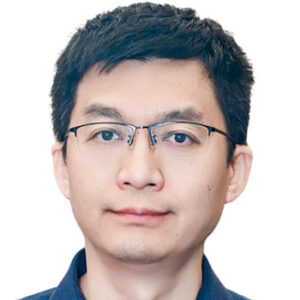
Dr. XU Tong is a tenured associate professor of computer science at Beijing University of Posts and Telecommunications(BUPT). An IT innovator for over two decades, he led the development of two products, each serving more than one billion users, and received two National Science and Technology Progress Awards. For the past five years, he has focused on AI-enhanced teaching and innovative talent development. He mentored student teams to create MashOn and TruFar, recognised by China’s Ministry of Education as an exemplary “AI + Higher Education” initiative. The platforms have served nearly 100,000 teachers and students from over 500 institutions. He also founded the Mashine Innovation Society, a student innovation community with over 3,000 members.